

The question shows up in searches all the time: how to make a sex toy yourself, with whatever you have lying around? Before you start any kind of DIY, one thing has to be clear. Most everyday objects turned into a sexual toy raise a real safety problem. Not a vague warning, a concrete risk: infections, micro-cuts, toxic materials. So this guide starts with safety first, then shows you genuinely healthier options.
- Many "homemade" objects are porous: they trap bacteria and fungi you can never fully remove.
- Some soft plastics release phthalates, endocrine disruptors that migrate into mucous membranes.
- The bare minimum if you improvise: a fresh condom plus a water-based lubricant, nothing else.
- A real entry-level silicone vibrator sometimes costs under 20 euros and stays far safer.
Everyday Objects You Should Never Use, and Why
This is the uncomfortable part, but it matters most. Online you will find dozens of tips and advice to create a homemade dildo or vibrator from ordinary things. The trouble is that these ideas circulate without a single word about the materials. Discover below why almost everything should be ruled out, and what actually holds up.
The first problem is porosity. A porous object has tiny cavities invisible to the eye. Paper, raw wood, foam, certain soft plastics: all of it soaks up fluids and keeps bacteria warm inside. You can scrub all you want, you never reach the bottom. The result is a perfect breeding ground for a urinary infection or a yeast infection.
The second problem is phthalates. These additives make plastic soft and shiny, and they show up in many products never meant for the body. With prolonged contact against a mucous membrane, they migrate. Several studies classify them as endocrine disruptors. Honestly, that is not something you want down there, and definitely not for too long. For sexual health, those two risks weigh more than people imagine.
Here are a few concrete examples, because vague lists are useless.
- Hairbrush, toothbrush handle or any rigid object: risk of internal injury, sharp edges, and a surface you cannot disinfect deeply.
- Fruits and vegetables (cucumber, banana, courgette): they rot, carry pesticide residue and throw off your flora. The “natural” angle is a false good idea.
- Candle, thin glass bottle, light bulb: anything that can shatter inside the body is a medical emergency. Ban it, full stop.
- Repurposed electric device (electric brush, small vibrating motor): risk of shock, overheating, and zero waterproofing. The improvised vibrating motor is one of the most dangerous ideas out there.
- Bags, gloves or plastic films used as a sheath: they tear and release exactly the phthalates mentioned above.
Table: Object, Risk, Verdict
| Everyday object | Main risk | Verdict |
|---|---|---|
| Toothbrush / hairbrush | Cuts, porous surface | Avoid |
| Cucumber, banana | Pesticides, fermentation, flora imbalance | Avoid |
| Glass bottle, light bulb | Internal breakage, emergency | Danger |
| Repurposed electric brush | Shock, overheating, no sealing | Danger |
| Rolled paper, foam | Porosity, bacteria you cannot remove | Avoid |
| Fresh condom on a smooth, suitable support | Limited but acceptable if done right | Acceptable with conditions |
Are There Any Acceptable Materials?
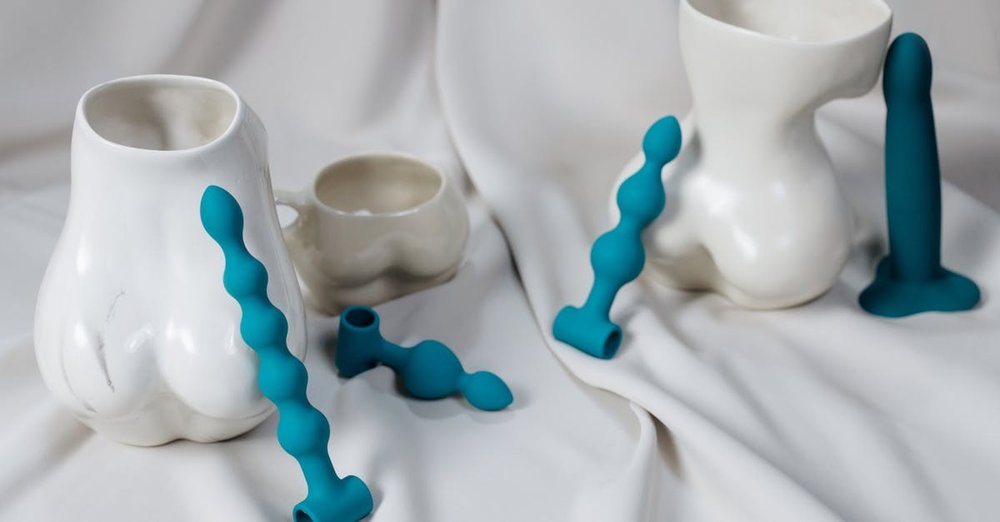
Yes, but the list is short, and it rarely matches what you actually have at home by chance. The only materials considered safe for the body are medical-grade silicone, borosilicate glass (the kind used in real toys, not a bottle), polished stainless steel and certain enamelled ceramics made for this use.
What do they have in common? They are non-porous, smooth, and they handle serious cleaning. Silicone dominates the market because it is soft, simple to maintain and stable. A silicone vibrator wipes clean in seconds, dries perfectly and keeps nothing. A whole category of sex toys is built on this material, and that is no accident.
The catch is that a home almost never provides these materials in a usable form. A stainless bowl has neither the right shape nor the right finish. Making your own food-grade silicone gives a fragile, poorly polished result, so porous again at the edges. In short, building a truly safe toy yourself is far harder than it looks.
The Non-Negotiable Hygiene Rules
If you still decide to improvise, these rules are not up for debate. They lower the risk, they do not erase it.
- A fresh condom every time. It is the most effective barrier to isolate the mucous membrane from a questionable surface. One per use, never reused.
- Water-based lubricant only. It respects the condom latex and does not attack materials. Silicone-based lubricant, on the other hand, can degrade some toys.
- Wash your hands and the support object before and after, with lukewarm water and mild soap. Make sure no edge sticks out.
- Nothing in the anus without a flared base. Without that base, an object can travel up and cause an emergency. It is the most common accident.
- No sharing. An improvised object is not lent out, even cleaned.
This hygiene routine also applies to your real toys, by the way. For the cleaning details by material, take a look at our guide on how to clean a sex toy properly.
A Few Slightly Safer DIY Alternatives
Let us be honest: no homemade solution matches a toy designed for the job. But if the urge for DIY and creativity is itching at you, some approaches limit the damage better than others.
- A firm cushion or pillow, wrapped in a clean cloth, for external stimulation through pressure. No insertion, so no risk of internal injury. This is probably the most harmless option.
- The showerhead on a soft, lukewarm jet, aimed externally, for clitoral stimulation. Never internal pressure, and you control the temperature.
- A smooth, fresh, well-lubricated glove, for a more enveloping manual caress. Simple, clean, and everything stays in your hand.
None is fully safe, but each one is far less risky than an inserted object. These ideas rely on external stimulation and pressure, not on inserting an untested object. The difference in safety is huge. You enjoy sexual pleasure without turning your body into a test zone for some risky DIY.
Why a Cheap Real Sex Toy Stays Safer

Here is the heart of it. Many people want to make a homemade sex toy, to make sex toy after sex toy on the cheap, for money or discretion reasons. That is understandable. You want homemade pleasure right now, without placing an order. Except an infection, an ER visit or an endocrine disruptor cost infinitely more than an entry-level toy.
The market has changed enormously. A small medical silicone vibrator, waterproof and rechargeable, sometimes sells for under 20 euros. For that price you get a non-porous material, controlled manufacturing steps and a clear instruction mode. No DIY tip offers you that.
And in terms of experience, there is no contest. A vibrating toy designed for the body targets stimulation zones better, offers several intensities and lasts over time. The pleasure is more reliable, and safety comes with it. If you are unsure which type of object to pick, our comparison on which sex toy to choose for your use will help you aim right. And for safe bets, check out the best sex toy of the moment.
In short, how to make something yourself is no longer really the right question. The real one is: why take a risk to save a few euros, when a safe product is a click away?
Frequently Asked Questions
Can you really make a homemade sex toy without danger?
Not entirely. You can lower the risk with a fresh condom, a water-based lubricant and mostly external stimulation. But zero risk does not exist with materials not meant for the body. A real toy stays the only truly safe solution.
Is food-grade silicone fine for a DIY sex toy?
Not really. Food-grade silicone does not have the same finish as medical silicone, and a homemade mould leaves porous edges. You end up with a surface that traps bacteria. A finished silicone vibrator is far better.
Which everyday objects are the most dangerous?
Anything that can shatter (glass, bulb), anything electric (electric brush, improvised vibrating motor) and anything without a flared base for anal use. These three cases often lead to the ER.
How much does an entry-level real sex toy cost?
Often under 20 euros for a waterproof, rechargeable silicone vibrator. It is one of the best safety-to-price ratios around, and far simpler than any DIY.
Do you always need a condom on an improvised object?
Yes, no exceptions. The condom isolates the mucous membrane from a questionable surface and limits material transfer. With a water-based lubricant, it is the bare minimum if you improvise.